State-sponsored attackers conduct complex Social Engineering campaign targeting App-Specific passwords to bypass MFA
Take action: A very complex and systemic social engineering attack to bypass MFA protections by persuading the victim to give the attackers a password. Never create Google App-Specific Passwords based on unexpected email requests, even if they appear to come from legitimate government agencies with official-looking documents and CC'd email addresses. Be VERY careful about such unexpected emails, call and confirm independently.
Learn More
A sophisticated social engineering campaign attributed to state-sponsored threat actors successfully compromised the email accounts of prominent academics and critics of Russia by exploiting a novel attack method involving Google App-Specific Passwords (ASPs).
The attack campaign, which operated from at least April through early June 2025, is an evolution in cyber espionage tactics as threat actors adapt to expanded multi-factor authentication.
What are App-Specific Passwords?
Google App-Specific Passwords (ASPs) are 16-character authentication codes that allow third-party applications to access your Google account when those applications cannot support Google's standard two-factor authentication (2FA) or modern authentication protocols.
When you enable two-factor authentication on your Google account, some older applications or devices may not be able to handle the additional security step required during login. Instead of entering your regular Google password, you create an App-Specific Password that acts as a substitute credential for that particular application.
The basic process:
- You generate an ASP through your Google Account security settings
- You enter this 16-character code as the "password" in the third-party application
- The application can then access your Google services (like Gmail or Google Drive) without triggering 2FA prompts
- Each ASP is unique and can be revoked individually without affecting other apps or your main account password
Attack scenario
The attack technique gained public attention when Keir Giles, a prominent British expert on Russian information operations and senior consulting fellow at Chatham House, was targeted. On May 22, 2025, a sender purporting to be U.S. State Department official "Claudie S. Weber" sent an email to Mr. Giles , initiating what would become a weeks-long conversation with more than 10 email exchanges.
The core deception centered on convincing targets to create App-Specific Passwords under the guise of registering for a fictitious "MS DoS Guest Tenant" platform. The attackers provided professionally crafted PDF documents that appeared to be official State Department publications, complete with proper formatting, markings, and revision history, walking victims through the ASP creation process step-by-step.
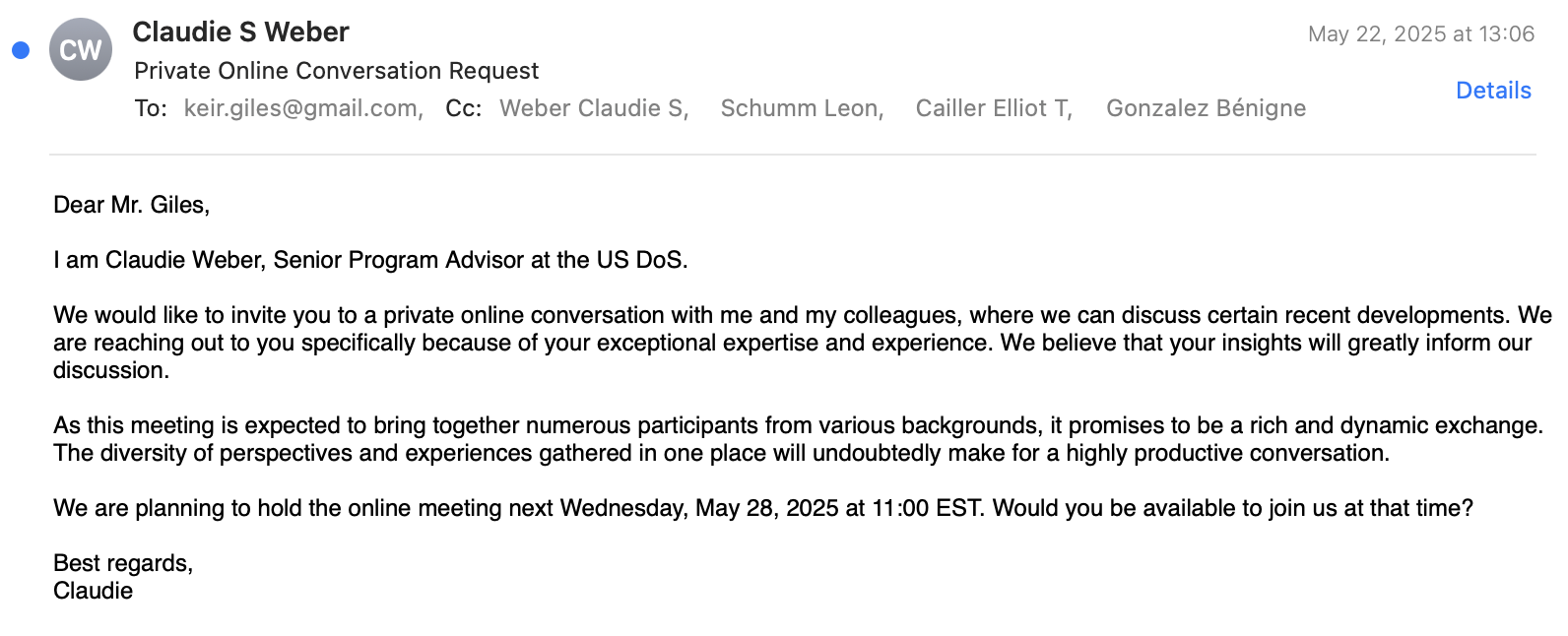
Screenshot of an email with fake CC-d users with @state.gov addresses. Source Citizenlab.ca
The attackers supported their emails by adding recipients with @state.gov email addresses in the CC field. A victim seeing these email addresses in CC will assume that they are real and that if anything was wrong these people will react. Naturally, these CC-ed @state.gov recipients were fake, but the target has no way of knowing that unless they click "reply to all" and get "no such user" error.
But we are all trained to be careful with "reply to all".
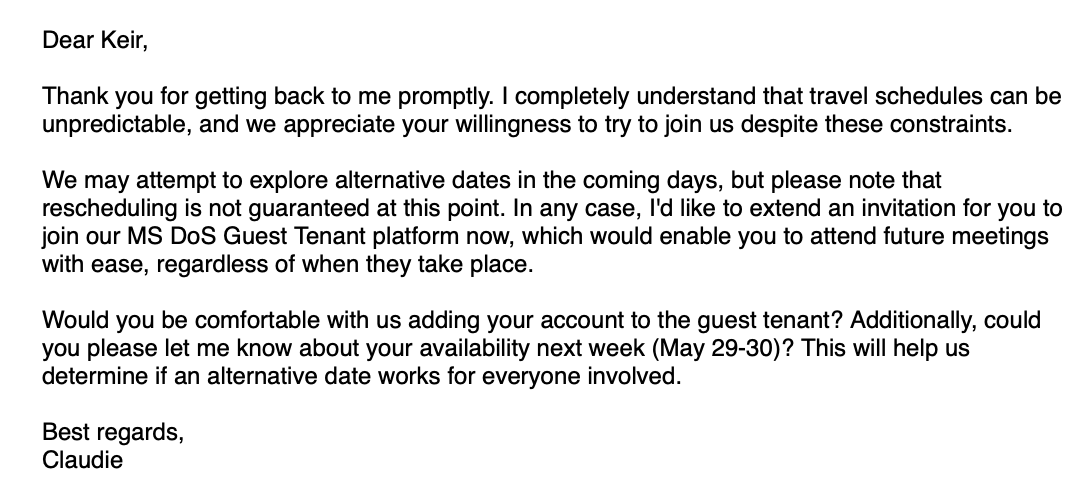
Fake offer to join the DoS Guest Tenant. Source Citizenlab.ca
The attackers were very patient and adaptable. When Giles initially experienced difficulties creating ASPs on his primary accounts, the attackers provided detailed troubleshooting assistance, even requesting screenshots of specific Google account pages to resolve issues.
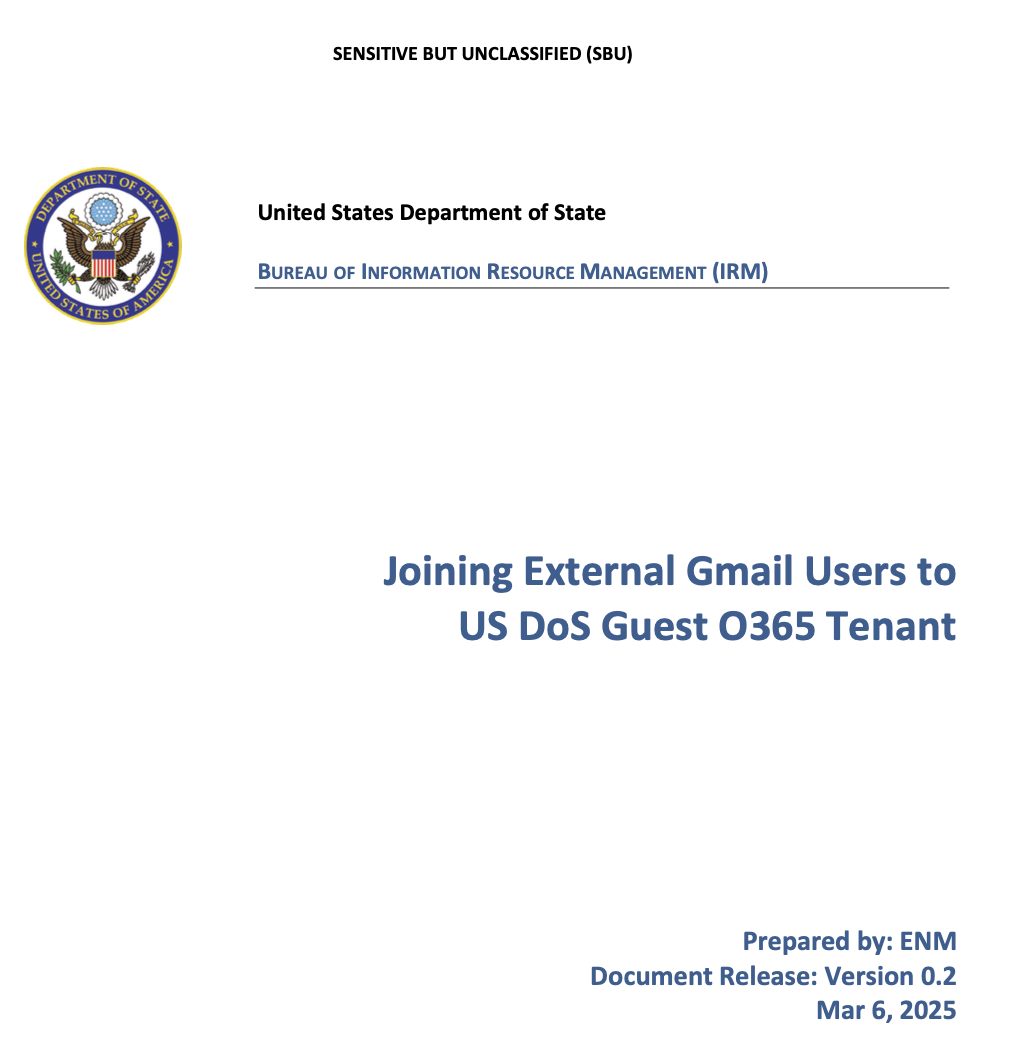
Screenshot of a fake document created by the attackers. Source Citizenlab.ca
The campaign began in April 2025 and continued through early June 2025. Giles' specific targeting commenced on May 22, 2025, with the initial contact email. Google sent Giles a notification saying that it had sniffed out a suspicious log-in attempt on June 4, nearly two weeks after the attack began, when the company's security systems detected unauthorized access from a Digital Ocean IP address (178.62.47[.]109).
Compromised Data Types
- Email correspondence and communications
- Account access credentials (App-Specific Passwords)
- Potentially sensitive research and academic materials related to Russian operations
Scope and Impact: While Keir Giles represents the most publicized victim of this campaign, Google said it observed a second campaign bearing Ukrainian themes indicating broader operational scope. GTIG researchers have seen similar attacks on academics and Russia critics from April through early June. Google researchers note the attacks were not "widespread" due to their resource-intensive nature. The exact number of affected individuals across both campaigns is not disclosed.
Mr. Giles has publicly shared his suspicion that the material exfiltrated from his accounts is likely to be manipulated and selectively released as part of a future information operation.
Google's security systems eventually detected the suspicious activity and secured the compromised accounts. The company has since recommended that high-risk individuals enroll in Google's Advanced Protection Program, which prevents the creation of App-Specific Passwords due to enhanced security requirements.
Organizations are advised to audit their use of ASPs and disable them unless specifically needed for legitimate business purposes.